Imagine standing by the ocean at night. You see waves rising and falling, each with a shape, a beginning, and an end. If a wave had a mind, it might say, “I am this curve of water. I was born there. I will die on the shore.” But the ocean knows no such boundaries. The wave was never separate from the sea — it was the sea, temporarily shaped. In the same way, what you call “you” — your body, your thoughts, your memories — is a temporary formation in a vast field of existence. The atoms in your body were forged in ancient stars. The breath you take was breathed by forests. The consciousness through which you read these words is not visibly divided by skin. The sense of separateness arises because awareness is filtered through a nervous system, creating a viewpoint. But the field in which all viewpoints appear is one seamless whole. You are not a fragment inside the universe; you are the universe experiencing itself from a particular angle.
The illusion of the world is not that it doesn’t exist, but that we think it exists in isolated pieces. Time feels linear because memory arranges experience into past and future, yet every experience you have ever had occurs only in the present moment. The “past” is a memory appearing now; the “future” is an imagination appearing now. Strip away memory and anticipation, and there is only this unfolding presence. Non-dual philosophy calls this the real — not a distant heaven, not a hidden dimension, but the raw fact of being itself. When identification shifts from the changing story to the silent awareness in which the story unfolds, the boundaries soften. The tree, the sky, the stranger, the star — all are movements of the same totality. The universal truth, in this view, is simple but unsettling: there are not many selves moving through a dead cosmos. There is one living reality, appearing as all things, knowing itself through every eye.
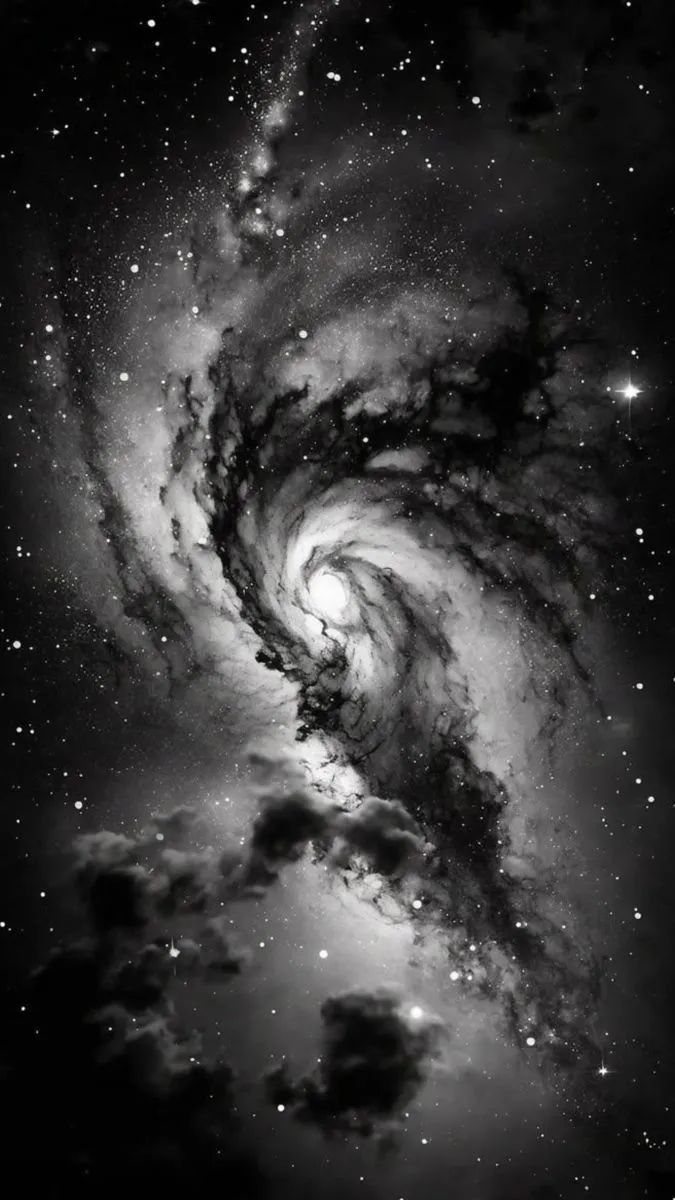
There was a time when we knew all of this, but the knowledge of lost in a tragic development.
The Tragedy
Long before borders were drawn and census boxes were printed, the people of this land did not wake up calling themselves followers of a “religion.” They spoke of dharma — the principle that sustains life, the rhythm that keeps the cosmos in balance, the inner law that guides right action. Their sages did not claim exclusive revelations; they asked questions. In forests and gurukuls, they debated consciousness, matter, logic, mathematics, astronomy, and liberation. Some spoke of the formless absolute, some of devotion, some of yoga, some of ritual — all under the vast umbrella of Sanātana Dharma, the “eternal way.” It was not a single book, a single prophet, or a fixed creed. It was a living civilizational inquiry into reality.
Then travelers and invaders arrived. Looking from the outside, they needed a label. To describe the people living beyond the Sindhu river, they used a geographical term — “Hindu.” Over centuries, administrators, missionaries, and colonial scholars grouped countless philosophies, temple traditions, yogic sciences, and metaphysical schools into one category. What had been a fluid, evolving knowledge tradition became boxed into the Western idea of “religion,” comparable to Christianity or Islam — systems defined by centralized doctrine and exclusive belief. The depth was compressed into a checkbox. The ocean was renamed as if it were a pond.
The misunderstanding was not just linguistic; it was conceptual. Dharma was never about blind belief in a distant deity; it was about understanding the nature of self, cosmos, and consciousness. It allowed atheistic schools, devotional schools, non-dual inquiry, ritual practice, meditation, logic, and even debate with no fear of excommunication. But once reframed as a “religion,” it began to be defended and practiced like one — rigidly, reactively, sometimes forgetting its original expansiveness. The tragedy was not that a name was given; names evolve. The tragedy was that many began to mistake the label for the essence.
To rediscover Sanātana Dharma is not to reject a modern identity, nor to fight other paths. It is to look deeper than the word “Hinduism” and see the civilizational depth beneath it — a tradition that does not demand belief but invites exploration, that does not close questions but opens them, that does not insist “only this,” but whispers, “know yourself.” When people understand that, the box breaks on its own — and what remains is not a religion in the narrow sense, but a timeless search for truth.
Disclaimer: This is not my knowledge. It’s ancient knowledge of our civilization.

Leave a Reply